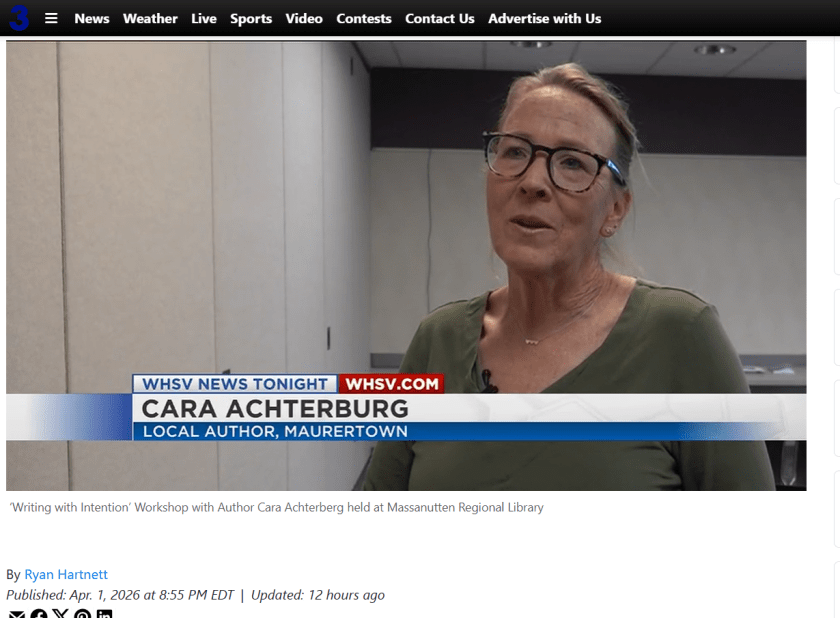
Last night, I had the opportunity to speak to the Rocktown Writers Guild about what it means to write intentionally (and the TV news showed up).
I believe with all of me that if we don’t live with intention, we are missing out. Fumbling through our days on auto-pilot, reacting to what lands in our path or on our screens, is not a joyful life.
The same goes for our writing. If we don’t write with intention, our writing will not go anywhere, or at the very least, not go anywhere fast.
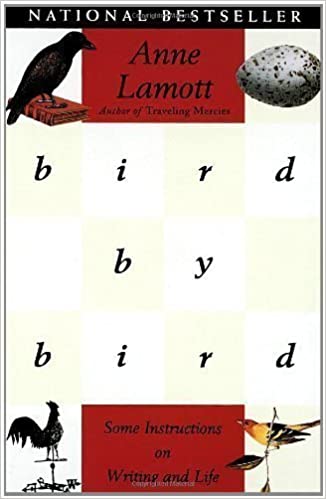
Now, I think I love Anne Lamott more than the average bear. I’ve read everything she’s written, stalk her a bit on Facebook, even listen to the sermons she’s given at random churches throughout the years. But…
Here’s the thing. We teach best what we most need to learn. As a mediocre rider, I learned A LOT teaching riding. As a passionate, but unstructured, often too-wordy writer and struggling, lazy marketer, I am good at teaching writers to write and publish. Because I’ve had to work so hard for it. When something doesn’t come naturally, you have to pick it to pieces to figure it out. If you’re a natural, well, how do you teach that?
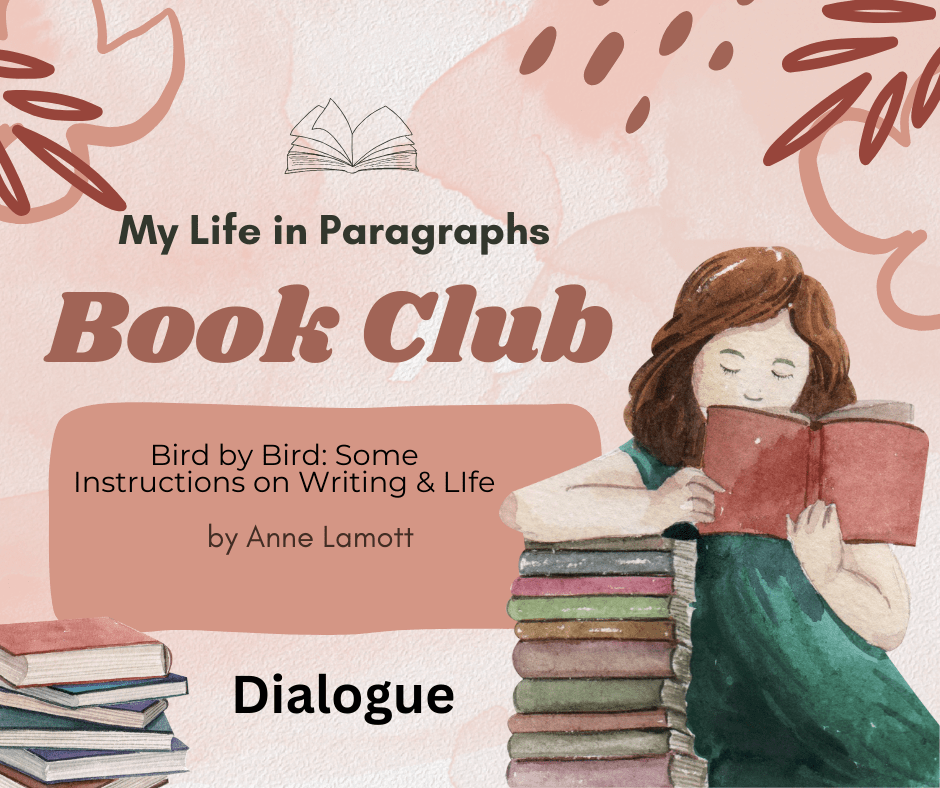
Anne Lamott, while a wonderful teacher in many ways, is not the best at teaching dialogue. Why? Because she is a master at writing it. How many times have you read her work and felt like she was talking to you from across the booth at your favorite coffee shop. Or thought, ‘she totally gets it.’ (If you don’t believe me, read Operating Instructions.)
This very short chapter on dialogue is pretty vague with lots of ideas but nothing truly concrete beyond listen to your characters well so that you can make them speak authentically.
She also advises listening to people everywhere in your life and remembering cadences, tones, turns of phrase.
Unless you’re walking around with the recording app going on your phone. Which seems brilliant until you realize you will never actually listen to all that dribble and ums and mundane conversation about the weather and how ‘totally fine’ you and everyone you run into are doing (when in reality you are struggling to make it to lunch time and the freedom to play Match 3 unencumbered on your phone, which will be dead by then because of all that recording).
And, for the most part, we don’t remember the words people say. Instead, we remember the feeling we got from those words.
Another brilliant writer, Maya Angelou, said it best when she said people will not remember what you do, but they will remember how you made them feel.
I’m not saying that reading the chapter on dialogue won’t teach you something. Everything you read teaches you something.
Instead, I’m going to offer you a mini-version of the class I teach on dialogue.
Dialogue is the best way to reveal characters.
Use characters’ names sparingly. We don’t say each other’s names very often in real life. Using a person’s name every other line is awkward (try this in real life).
Use only dialogue tags that are necessary and use primarily “said.” Avoid adverbs at all cost! (if you have to describe how someone said something, then re-think what they are saying. Not to beat a dead horse, but show, don’t tell.)
Read it outloud. If you really want to hear it, read it outloud with someone else. (You can also try using the voice on your computer to read it to you.)
Don’t use dialogue to dump information. (That’s lazy writing.) No soliloquys. People don’t talk like that, and if they did they would have no friends.
You don’t need all the hellos and good byes, or the small talk of real life, it’s boring and drags down the dialogue.
Characters generally sound better and think faster than we do. Be clever and funny, whenever possible.
Punctuate correctly – learn this. Doing it wrong is a giveaway that you are an amateur. There are lots of resources for this – study them.
You don’t have to give complete conversations. That’s too tedious for the reader. Jump in mid-conversation and jump out before it’s completed.
People have distinct speech patterns, but they may be subtle. Kids sound different than adults. Educated sounds different than uneducated. Think about who your characters are – none should sound the same. In fact, once we know our characters we should be able to tell who is talking by the way they talk.
My personal golden rule: Characters don’t waste words. If it doesn’t move the story forward or reveal character, cut it out.
I usually teach that in about 90 minutes with lots of examples and exercises, so if any of it doesn’t make sense, please raise your hand. I’m happy to expound on any of it.
Hey, thanks for reading. I know you’ve got lots of options, so thanks for sharing a few of your minutes with me.
Honored,
Cara
If you’re curious about what else I’m up to, check out my website, CaraWrites.com.
If you’d like to subscribe to my twice monthly emails, click here.
My latest novel, Blind Turn is a mother-daughter story of forgiveness in the aftermath of a fatal texting and driving accident. It won the Womens Fiction category of the American Writing Awards in 2022. Learn more about it and find out how to get your copy here.
My most recent memoir, 100 Dogs & Counting: One Woman, Ten Thousand Miles, and a Journey Into the Heart of Shelters and Rescues is available anywhere books are sold, but if you’d like some help finding it (or want to read some lovely reviews), click here.
It’s where pantsers and plotters part ways. I have never been able to plot. The times when I’ve plotted out a story before starting to write, it’s felt stilted and uncomfortable and forced. Like doing a homework assignment. Check that rubric – are you hitting all the right notes?
Once I’ve regurgitated what I’d planned, I feel let down. Like I was waiting for this great thing, and it disappointed. The idea seemed so much better in outline form.
I miss having a book club. Since moving to the valley, I’ve been a reading club of one.
I did try to get a book club going in the early days, but meetings were rescheduled or hijacked by too much wine and one by one everyone dropped out. It died after a very short run in which I think we might have read four books (none that I remember well except the one about Elon Musk which I had to read while holding my nose).
I buckled down and got serious about my assigned reading this week, plowing through three chapters of Story Genius. The picking apart of the story writing process prickled my nerves a bit. I’ve never been good at following directions and details bore me to tears, but I pledged to read this book so I powered on.
I found myself, nodding, duh, duh, duh at some points and at other times I underlined sections like I did in American History class, thinking, “This is the part that will be on the test.”
And then I went for a run and thought about it. I don’t have time to read to be reading. My shelves are creaking with books I’m dying to read. So, what is the point here? Why am I forcing myself to read craft books? Can’t I just write? Continue reading “Nature Vs Nurture: Am I a Story Genius?”
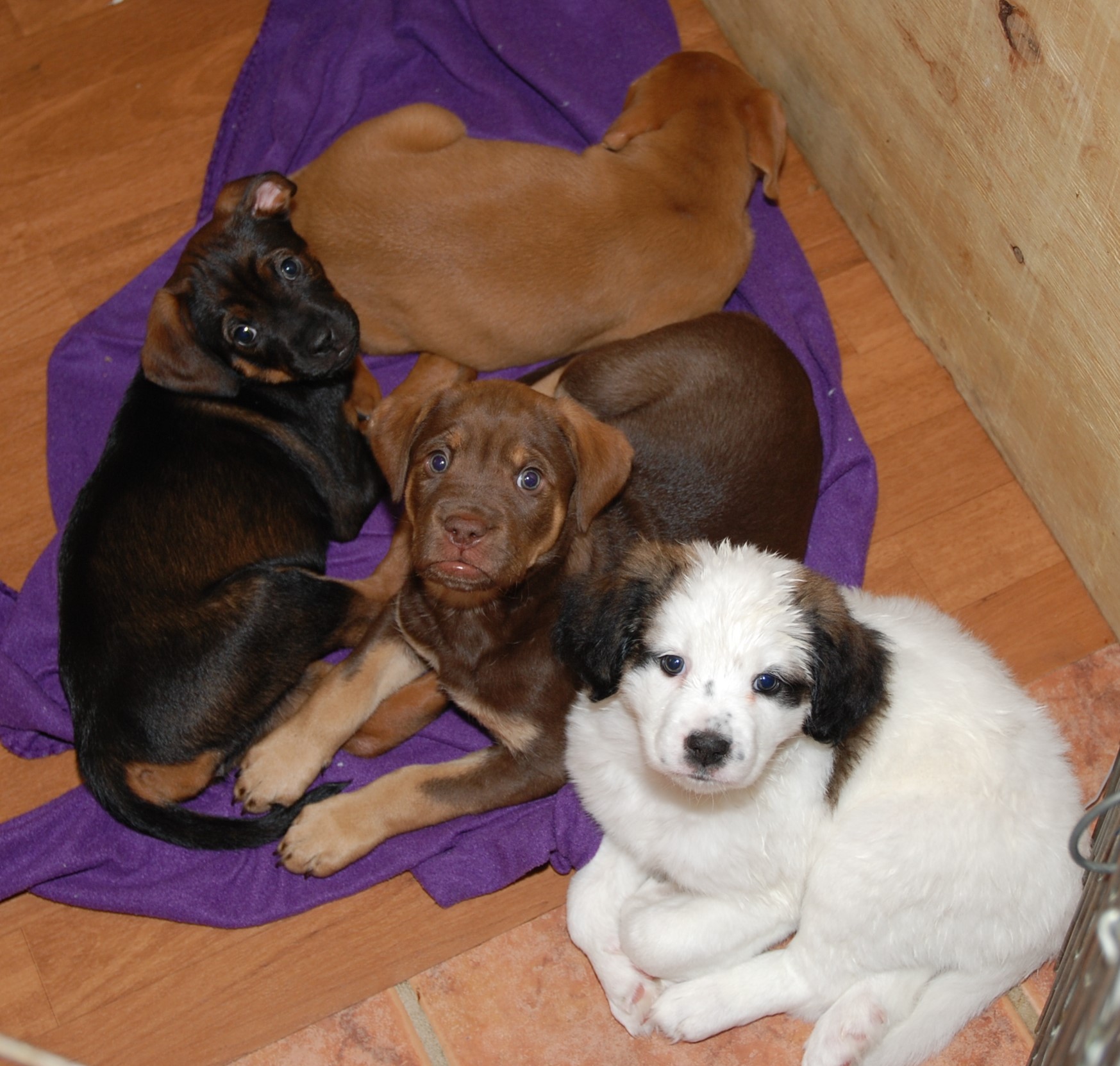
Reading multiple writing books at once has my head spinning. This past week, while distracted by my BIG NEWS, I had a hard time making myself sit down and follow my reading plan for becoming a better writer. I do my assigned reading in the evening, but each night I found a reason not to read. Instead, I spent a lot of time with my foster puppies…..
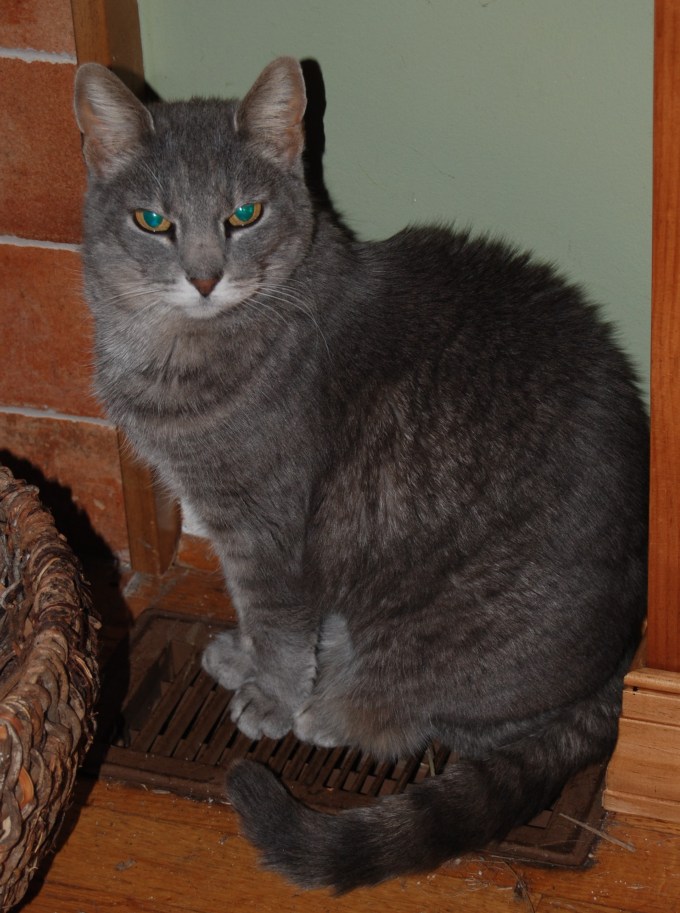
This is a picture of my cat Hermoine, because she changes her mind frequently and never apologizes about it (she also sits shamelessly on the heater vent and hogs all the heat in the kitchen). Please do not take note of the filthy floor, focus on the cat.
Story Genius and Lisa Cron are pretty genius.
After sharing my disdain last week, I take it all back. Digging deeper into this book, I’m finding nugget after nugget of gold.
Maybe I was a bit sensitive after her comments about pantsers (those of us who write by the seat of our pants as opposed to careful outlining). I’ve decided that Lisa Cron actually does have room for pantsers in her heart. At least my kind of pantsing.
She’s not shoving an outline down my throat (at least at this point), but she does want me to know exactly what it is my protagonist wants and what is keeping her from it. The intersection of those points is what she terms the ‘third rail.’
While I may have no idea what’s going to happen in any story I start, I do know my protagonist inside and out and am very certain of what she wants. I even know the first obstacle which will throw her into a tailspin and start my story. After that, though, all bets are off, but inevitably obstacle after obstacle will present itself.
In my novel Girls’ Weekendthere were three protagonists (although Cron has helped me see that there is actually an ‘alpha protagonist’) and I knew what those women wanted (even though not all of them did) and what stood in their way. In reality, looking back, that could have been three books. A nice little series. Coulda, woulda, shoulda.
So, yeah, enjoying Story Genius.
The other books are also inspiring me, even Donald Maass. Here’s a line I’ve been ruminating on from Fire in Fiction:
“Like a handshake, an opening and closing line can create impressions and expectations. They can set a tone.”
I’ve gone back and begun looking at each chapter and studied my opening and closing lines. It’s one way to be certain my story is bringing the reader along purposefully. He also talks about being certain there’s a purpose in every scene, not just artfully rendered sentences. I’m a serious proponent of that direction, and I chuckled at his line about the purpose not having to be obvious. There’s no need to “squat atop it like an elephant on an egg.” Totally going to steal that line at some point.
And then this from Fierce on the Page:
“This is the power of the written word. As we take in a story that affects us, we meet ourselves more deeply.”
Yes. That’s exactly it.
Natalie Goldberg echoes this sentiment:
“A responsibility of literature is to make people awake, present, alive.”
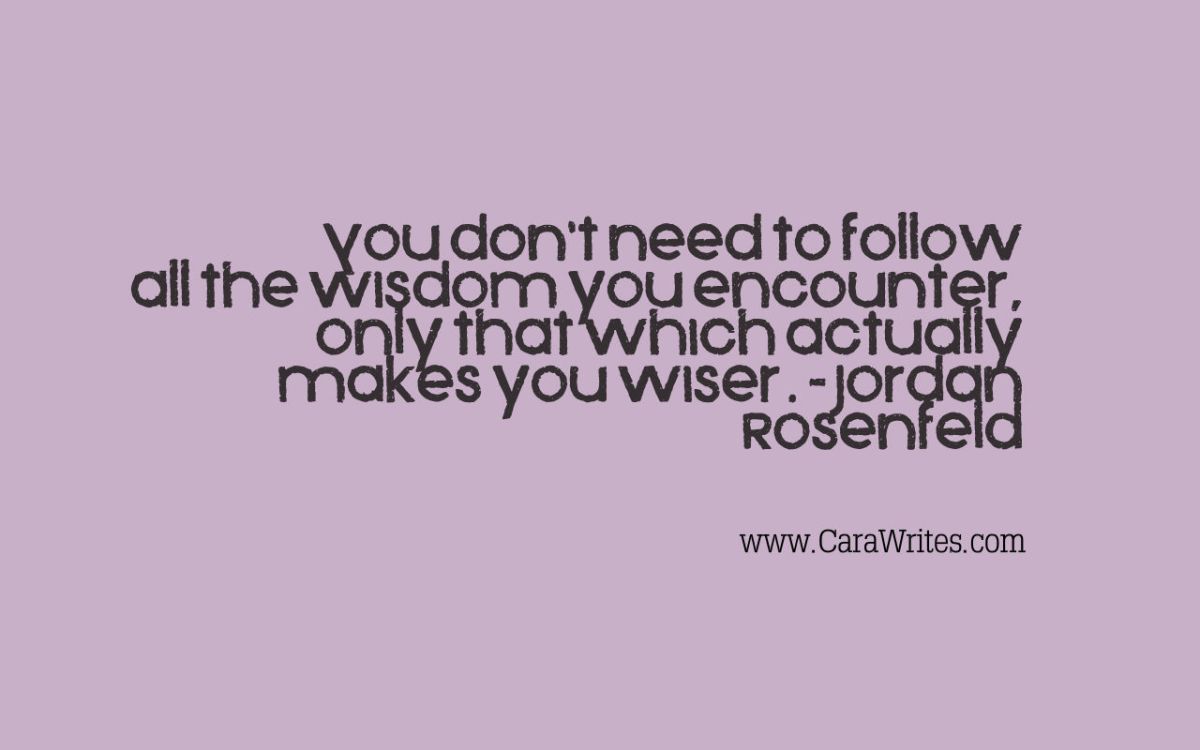
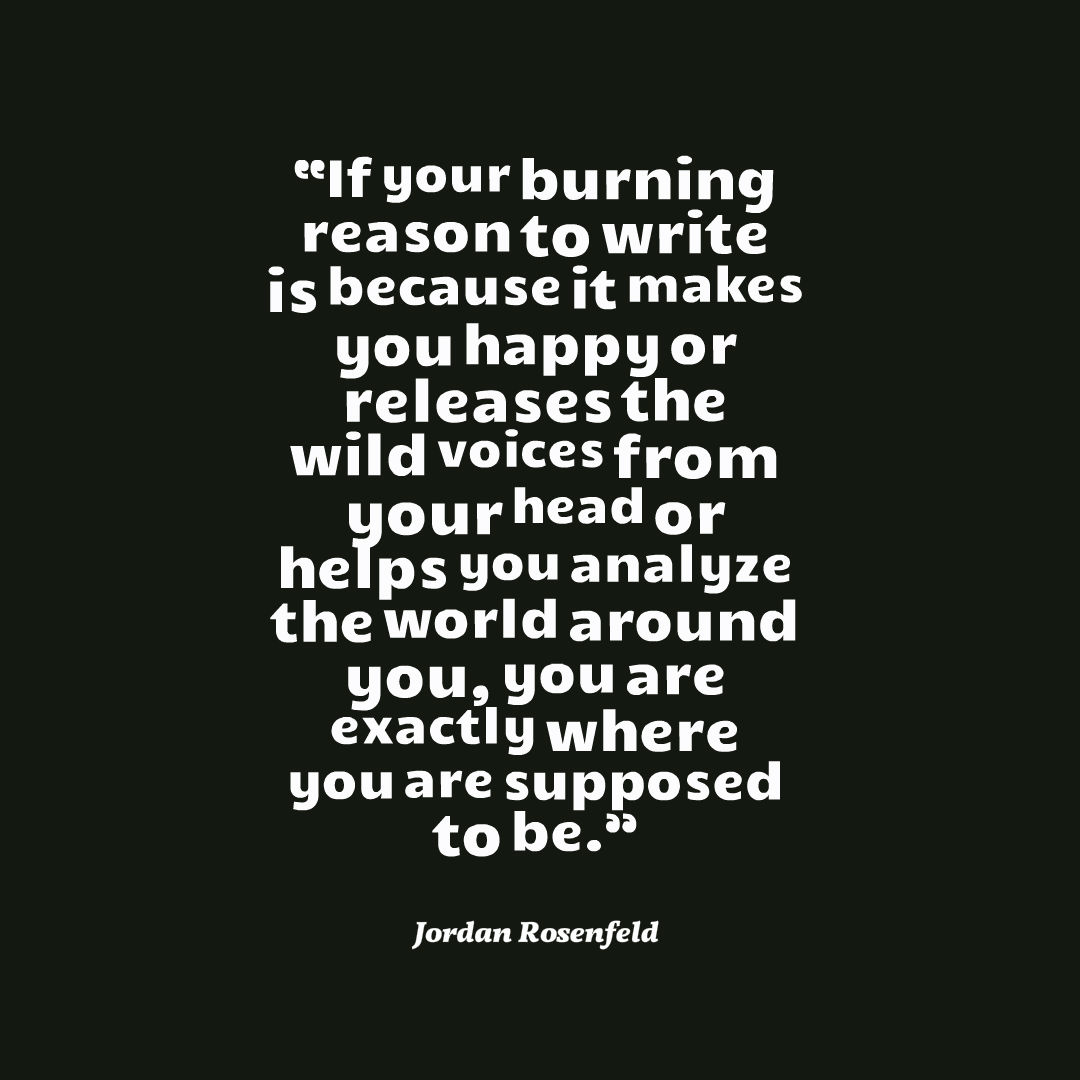
Doing all this reading about craft and purpose and style and function some days makes my head spin a bit and makes me feel like not only do I not know what I’m doing, but maybe I should apply for a job at the new Burger King that just opened in town. But Jordan Rosenfeld was there to catch me when she wrote:
“Trust your gut about what resonates and what does not. Know that you’ll know what to cut and what to keep…..You will find the alive passages, and you can even choose to build on them. Those are the words you are meant to write; similarly, the life that flows is the one you’re meant to live.”
I think she might have more faith in me that I have in myself, but I’ll borrow it for now.
May the power of literature change your life this week.
And now for all the self-promotional whoo-ha (cause this way we can be more connected, maybe even best friends…):
If you’d like to sign up for my not-so-regular-but-I’m-working-on-it newsletter, click here.
If you’d like to check out what else I write or take a peek at my books, hop on over to CaraWrites.com.
If you are a dog-person like me, visit my dog-blog that tells the tales of my family’s foster dog adventures.
I’m one week into my Be-A-Better-Writer reading plan and I already feel like a better writer. I’m learning a few things and I feel intentional, which is my favorite kind of feeling.
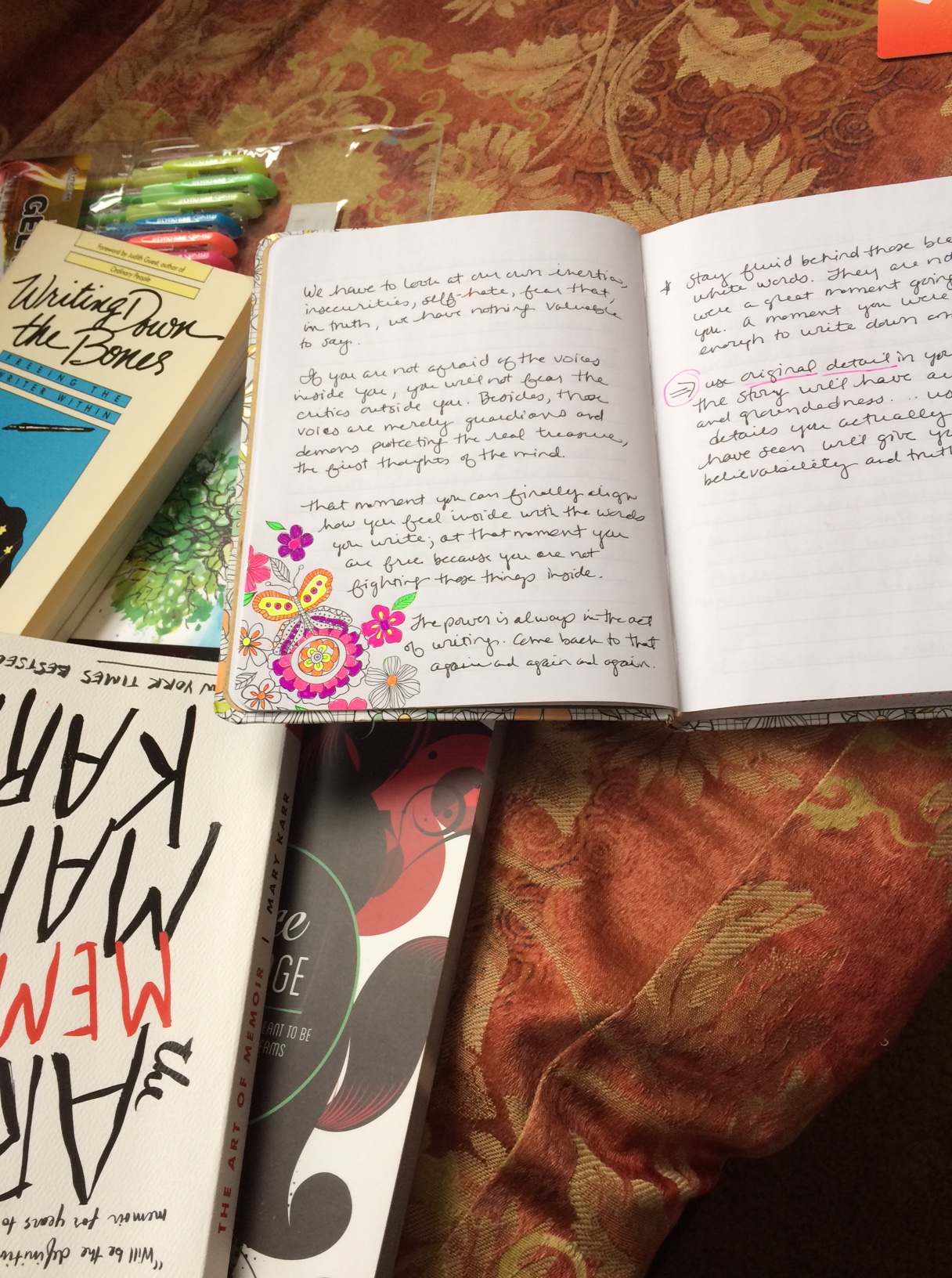
Plus, I really like coloring my notes with my gel pen set. I underline and star and copy thoughts into my notebook and then go back and circle and underline even more in color. Plus, some pages of my journal have little coloring breaks—
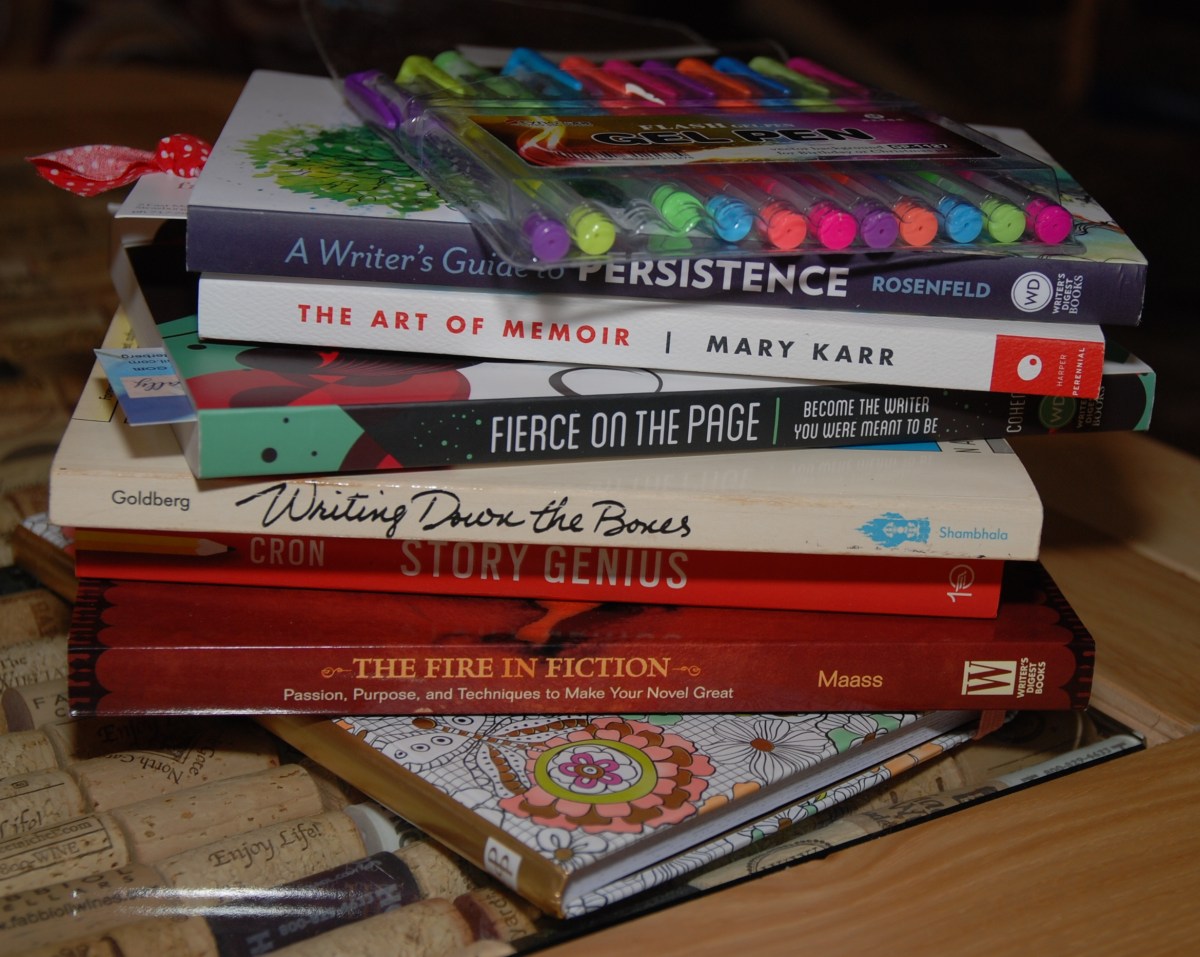
Reading six writing books each day is a bit like having six teachers hanging out in my office with me. I like some more than others. I find myself looking forward to opening some (Writing Down the Bones, The Art of Memoir), forcing myself to read others because I know it’s good for me (Fire in Fiction, A Writer’s Guide to Persistence), and having mixed emotions about the other two because while they captivate me with their engaging style, every now and again they irritate me (Story Genius, Fierce on the Page).
Some of the writers feel like old friends I’d love to meet for a beer and commiserate with about the sad state of the publishing industry. Others feel more like the teacher I had in third grade who was really pretty and let us watch Electric Company during class, but also scared the shit out of me and rendered me mute with her wicked brilliance and condescending confidence.
Story Genius is probably pushing me the most. It’s making me question the framework of the story I wrote this fall.
Fire in Fiction is making me examine the characters in that story. Although Fire in Fiction is also the book I’m least inclined to open if I’m sleepy or unmotivated. Maass uses TONS of examples from books I haven’t read which is frustrating because my sad little brain is overwhelmed with sorting out the story he’s quoting instead of the point he’s making. It’s exhausting. Add to that my feeling of inadequacy because I haven’t read so many of his examples. If I was a real writer, I would have read them, right?
One of my biggest regrets in this life (and I say that like I have a lot of regrets in this life, which I don’t) is that I didn’t study writing in college. Both my degrees are from liberal arts institutions, so that means I did plenty of reading and writing in college, even took courses on it, but I didn’t major in it. I look back now and I’m not sure why.
As a child, I read constantly, carting home stacks of books from the bookmobile that set up shop in the bank parking lot on Tuesday nights. Each summer before we left for our two week vacation in an un-airconditioned, TV-less cottage at a beach with no boardwalk, movie theater, or mall, my mom would take us to a used book store and I’d fill a brown grocery bag with books and then spend my entire vacation reading in the sun or on the screened in porch once I’d burnt my body to a crisp after a few days.
When I was a teen, I suffered through the self-conscious, angsty, insecurity typical of most teens (although at the time I thought I was the ONLY miserable teenager who hated to look in a mirror). Reading was my escape. I lost myself in books that took me far, far away from my tiny little town where every embarrassing moment and bad hair decision followed you through school with the same kids year after year.
In high school my favorite class was the journalism elective I took repeatedly, writing for the school paper. I loved the students in that class and the obvious passion of our instructor who ran the class as if we were a world-class publication.
Freshman year in college, that first semester in English 100, my wickedly funny professor always picked my essays and stories to read to the class with her syrupy southern accent, cackling as she read. She loved my writing and told me so.
So why I didn’t turn to writing as a career, I don’t know. I suppose I didn’t believe that I could possibly write something anyone would want to pay money for. Becoming a published author was, and still is, exceedingly difficult. It takes vast swaths of confidence in yourself and your abilities, something I was decidedly missing in my youth.
Since embarking on a professional writing career about ten years ago, I’ve done everything I can to educate myself. I’ve taken online courses, attended conferences, signed up for workshops and classes locally, and accumulated a vast library of books on writing. And yet, I still feel uneducated when it comes to writing.
So this year’s resolution is to hit the books. Many of the books I’ve piled around me have barely been opened. My excuse is I’m too busy writing, to read about writing. Pretty good excuse, right?
Not this year. I’m at an impasse in my career. My third novel comes out this spring and what happens after that is anybody’s guess. I don’t have a contract or commitment for my future writing. So, I’m taking this time to avail myself of the knowledge and direction in the books I already have (and a few I bought with the cash my FIL sent for Christmas – thanks Jim!).
I’m hoping to post about what I’m learning here on this blog, offer insights on my Facebook writer page and tweet the real gems on twitter. Again, best laid plans, you know? Puppies and publishing opportunities could sidetrack me, but I’m writing it here in the hopes that you people will hold me accountable.



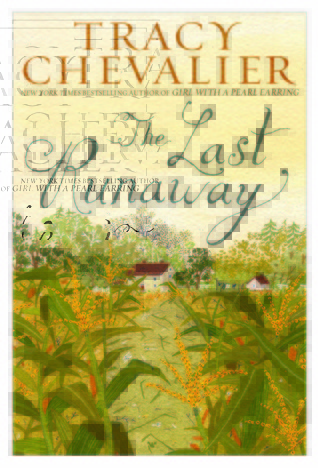
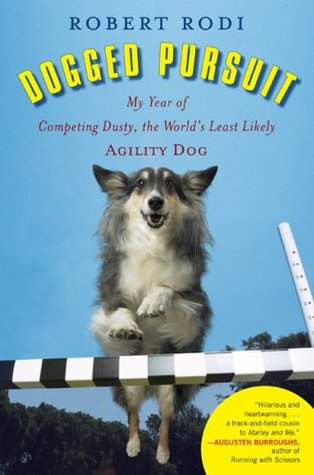 and The Last Runaway by Tracy Chevalier (exquisite).
  Next, instead of doing my assigned reading
 One of my biggest regrets in this life (and I say that like I have a lot of regrets in this life, which I don’t) is that I didn’t study writing in college. Both my degrees are from liberal arts institutions, so that means I did plenty of reading and writing in college, even took courses on it, but I didn’t major in it. I look back now and I’m not sure why.
 My Life in Paragraphs