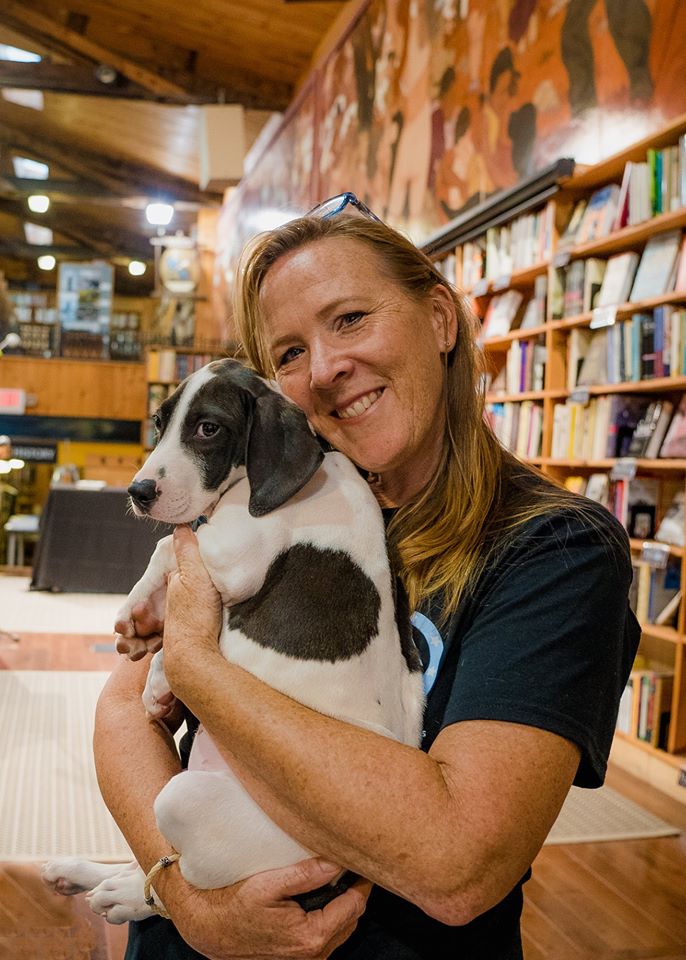
I am a writer, blogger, and dog rescuer. I live in the darling town of Woodstock, Virginia in the Shenandoah Valley with my husband and three rescue dogs (who rescue me on a daily basis). Find more information about my books, my dogs, and all my writing adventures at CaraWrites.com.
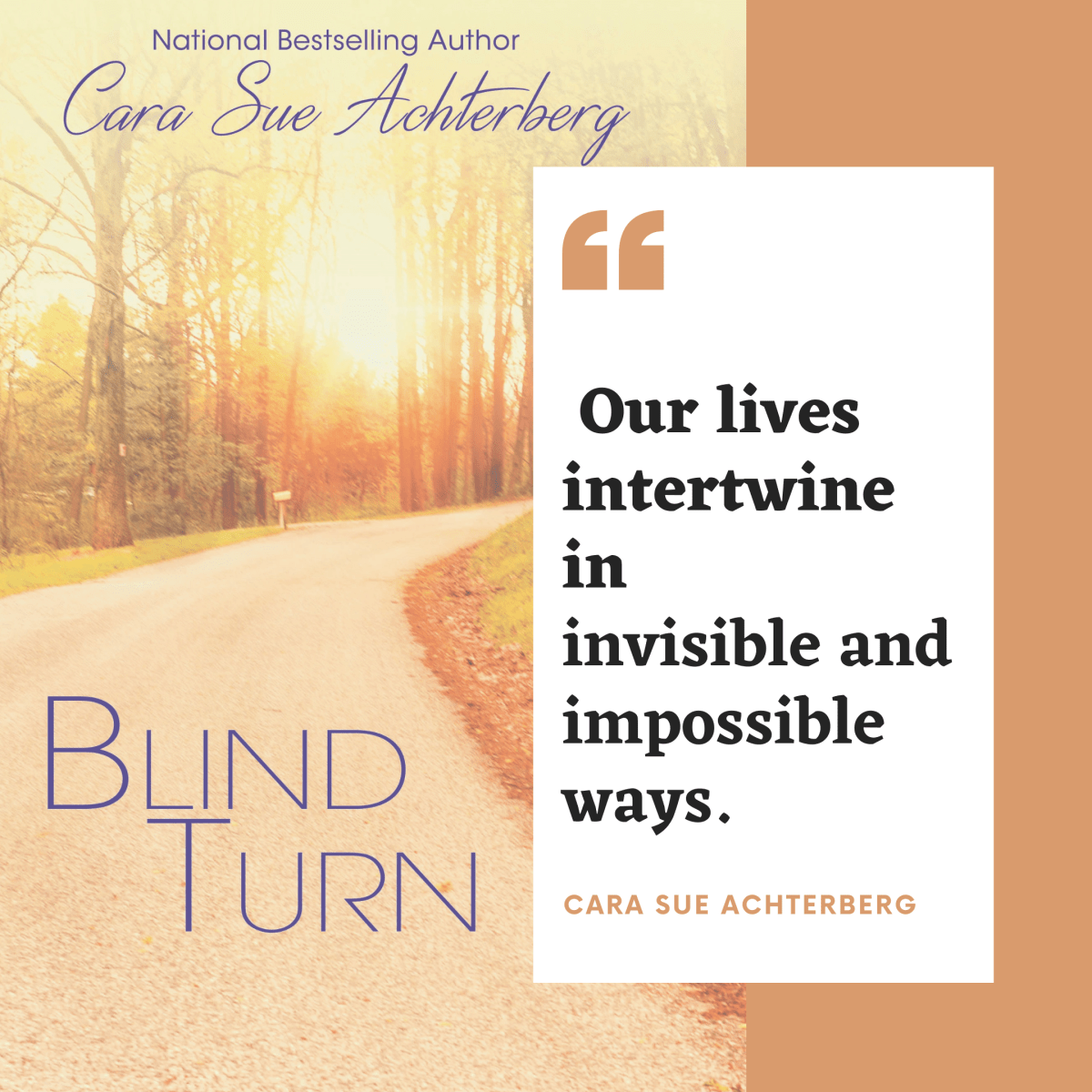
My most recent novel, Blind Turn, has had the longest and most winding road to publication of all my books. I looked back through my files to try to figure out when I started writing it – as best as I can tell, I began writing it in 2010.
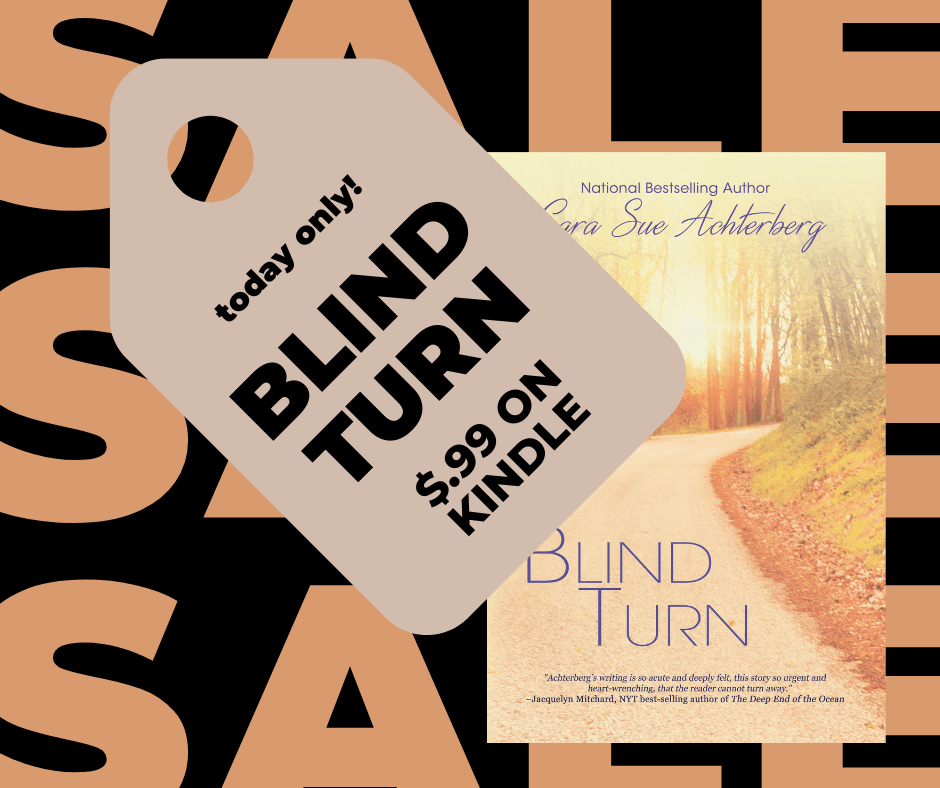
I was inspired to think about this because it was chosen to be the Ereader News Book of the Day for this Friday, August 30. For one day it will be just 99 cents!
So, if your reason for not buying a copy has been that you don’t want to spend the money, here’s your chance to get an e-copy for less than a dollar. There’s not much you can buy for less than a buck these days, so I hope you’ll take a chance on me..]
Back to my long and winding story, which I’ll try to keep brief by sharing it in a timeline:
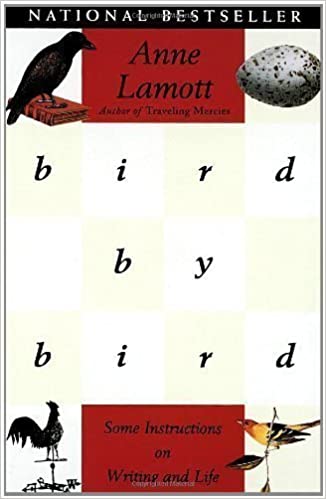
The next chapter in Bird By Bird is titled, “Set Design”, or in other words, setting. Setting is critical, but it can also be nauseatingly overdone (and underdone, as my sad story will reveal).
The reader needs to be able to picture your characters somewhere. And not just somewhere, but in what kind of weather? What time of day? What season of the year?
Now, I think I love Anne Lamott more than the average bear. I’ve read everything she’s written, stalk her a bit on Facebook, even listen to the sermons she’s given at random churches throughout the years. But…
Here’s the thing. We teach best what we most need to learn. As a mediocre rider, I learned A LOT teaching riding. As a passionate, but unstructured, often too-wordy writer and struggling, lazy marketer, I am good at teaching writers to write and publish. Because I’ve had to work so hard for it. When something doesn’t come naturally, you have to pick it to pieces to figure it out. If you’re a natural, well, how do you teach that?
Anne Lamott, while a wonderful teacher in many ways, is not the best at teaching dialogue. Why? Because she is a master at writing it. How many times have you read her work and felt like she was talking to you from across the booth at your favorite coffee shop. Or thought, ‘she totally gets it.’ (If you don’t believe me, read Operating Instructions.)
This very short chapter on dialogue is pretty vague with lots of ideas but nothing truly concrete beyond listen to your characters well so that you can make them speak authentically.
She also advises listening to people everywhere in your life and remembering cadences, tones, turns of phrase.
Unless you’re walking around with the recording app going on your phone. Which seems brilliant until you realize you will never actually listen to all that dribble and ums and mundane conversation about the weather and how ‘totally fine’ you and everyone you run into are doing (when in reality you are struggling to make it to lunch time and the freedom to play Match 3 unencumbered on your phone, which will be dead by then because of all that recording).
And, for the most part, we don’t remember the words people say. Instead, we remember the feeling we got from those words.
Another brilliant writer, Maya Angelou, said it best when she said people will not remember what you do, but they will remember how you made them feel.
I’m not saying that reading the chapter on dialogue won’t teach you something. Everything you read teaches you something.
Instead, I’m going to offer you a mini-version of the class I teach on dialogue.
Dialogue is the best way to reveal characters.
Use characters’ names sparingly. We don’t say each other’s names very often in real life. Using a person’s name every other line is awkward (try this in real life).
Use only dialogue tags that are necessary and use primarily “said.” Avoid adverbs at all cost! (if you have to describe how someone said something, then re-think what they are saying. Not to beat a dead horse, but show, don’t tell.)
Read it outloud. If you really want to hear it, read it outloud with someone else. (You can also try using the voice on your computer to read it to you.)
Don’t use dialogue to dump information. (That’s lazy writing.) No soliloquys. People don’t talk like that, and if they did they would have no friends.
You don’t need all the hellos and good byes, or the small talk of real life, it’s boring and drags down the dialogue.
Characters generally sound better and think faster than we do. Be clever and funny, whenever possible.
Punctuate correctly – learn this. Doing it wrong is a giveaway that you are an amateur. There are lots of resources for this – study them.
You don’t have to give complete conversations. That’s too tedious for the reader. Jump in mid-conversation and jump out before it’s completed.
People have distinct speech patterns, but they may be subtle. Kids sound different than adults. Educated sounds different than uneducated. Think about who your characters are – none should sound the same. In fact, once we know our characters we should be able to tell who is talking by the way they talk.
My personal golden rule: Characters don’t waste words. If it doesn’t move the story forward or reveal character, cut it out.
I usually teach that in about 90 minutes with lots of examples and exercises, so if any of it doesn’t make sense, please raise your hand. I’m happy to expound on any of it.
Hey, thanks for reading. I know you’ve got lots of options, so thanks for sharing a few of your minutes with me.
Honored,
Cara
If you’re curious about what else I’m up to, check out my website, CaraWrites.com.
If you’d like to subscribe to my twice monthly emails, click here.
My latest novel, Blind Turn is a mother-daughter story of forgiveness in the aftermath of a fatal texting and driving accident. It won the Womens Fiction category of the American Writing Awards in 2022. Learn more about it and find out how to get your copy here.
My most recent memoir, 100 Dogs & Counting: One Woman, Ten Thousand Miles, and a Journey Into the Heart of Shelters and Rescues is available anywhere books are sold, but if you’d like some help finding it (or want to read some lovely reviews), click here.
It’s where pantsers and plotters part ways. I have never been able to plot. The times when I’ve plotted out a story before starting to write, it’s felt stilted and uncomfortable and forced. Like doing a homework assignment. Check that rubric – are you hitting all the right notes?
Once I’ve regurgitated what I’d planned, I feel let down. Like I was waiting for this great thing, and it disappointed. The idea seemed so much better in outline form.
I love this chapter on Characters. Lamott connects it seamlessly to the preceding chapter by saying that characters develop just like polaroids, as you write your story, coming into focus the further you go.
That’s always been true for me. I love being surprised by my characters. Sometimes they don’t turn out to be anything like I first imagined they would be. As my story unwinds, my characters come to life.
Lamott says, “You are going to love some of your characters, because they are you or some facet of you, and you are going to hate some of your characters for the same reason.”
I remember the School Lunch chapter from the very first time I read this book. I didn’t get it. Maybe I still don’t. Lamott says school lunches are full of the same longings and dynamics and anxieties for everyone, even if the school setting is different.
Well, maybe it’s an East Coast/West Coast thing, but the experiences she writes about – what was acceptable (bologna, pb&J) mattered and you were ostracized for bringing smelly, wrong things (which often happened if your father made your sandwich)—those didn’t bring any sense of recognition for me. I remember basically zero about elementary school lunch period.
This next chapter is a short one (they all are really because Lamott doesn’t mince words). The focus is perfectionism and the danger it poses toward you as a writer.
I would say it poses just as much a threat to you as a person.
Here’s what Lamott writes:
“Perfectionism is the voice of the oppressor, the enemy of the people. It will keep you cramped and insane your whole life, and it is the main obstacle between you and a shitty first draft.”
I miss having a book club. Since moving to the valley, I’ve been a reading club of one.
I did try to get a book club going in the early days, but meetings were rescheduled or hijacked by too much wine and one by one everyone dropped out. It died after a very short run in which I think we might have read four books (none that I remember well except the one about Elon Musk which I had to read while holding my nose).
Maybe it’s my inherent need for a pat on the head, or my competitive nature, but tracking the books I read, my progress through them, my yearly goals, seeing what other people read (and think about what they read) all compels me to read more.